
British Inventions That Changed the World
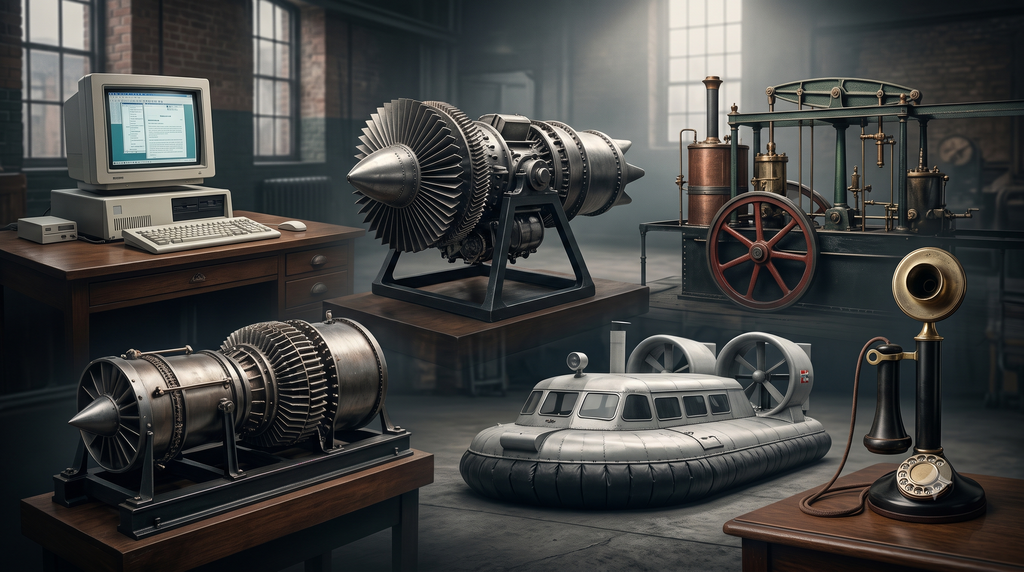
Britain’s modern-era legacy extends well beyond politics, exploration and the Industrial Revolution.
Some of its most enduring contributions were devices and concepts that became so ubiquitous that we scarcely think about them.
Every time we use a website, travel on a jet aircraft or encounter equipment that uses steam power, we are engaging with technologies developed by remarkable British innovators.
Some of these inventions were the result of decades of engineering.
Others were inspired by the most mundane-seeming problems.
And at least one was the outcome of a decidedly nonsensical-sounding experiment.
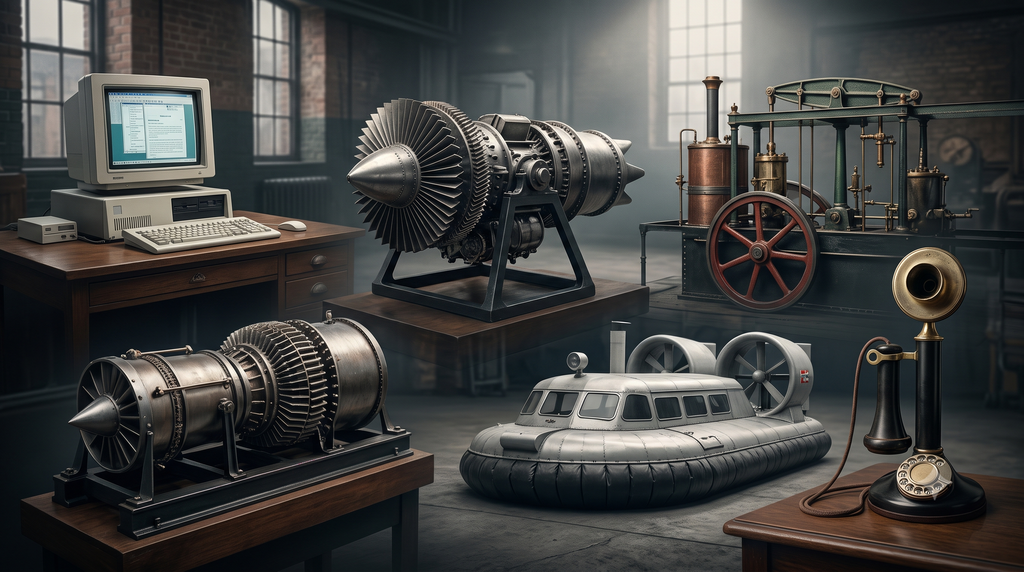
Here are five British inventions that changed the world – and the fascinating stories behind them.
1. The World Wide Web
The Internet and the World Wide Web Are Different
We often treat the internet and the World Wide Web as if they are the same thing, but they are not.
The internet represents the underlying global network; the Web is a way of organising and linking information via websites.
Tim Berners-Lee’s 1989 Idea
British computer scientist Tim Berners-Lee conceived of the World Wide Web in the late 1980s during his time at CERN.
His original 1989 proposal described a system for facilitating the sharing of information between different computers.
The first web server and browser software were created in 1990.
How the Web Became Public
One of the most important contributions that Berners-Lee made was not simply the technical design itself, but the decision to release the software for the Web into the public domain, free of royalties.
This allowed the Web to escape from its roots in scientific research and undergo something of an information explosion.
Modern websites, hypertext links, web publishing and much of the daily information-processing that we take for granted today are all the result of that initial insight.
Read next: How Britain Helped Create the Digital World
2. Frank Whittle and the Jet Engine
The British Engineer Behind Jet Propulsion
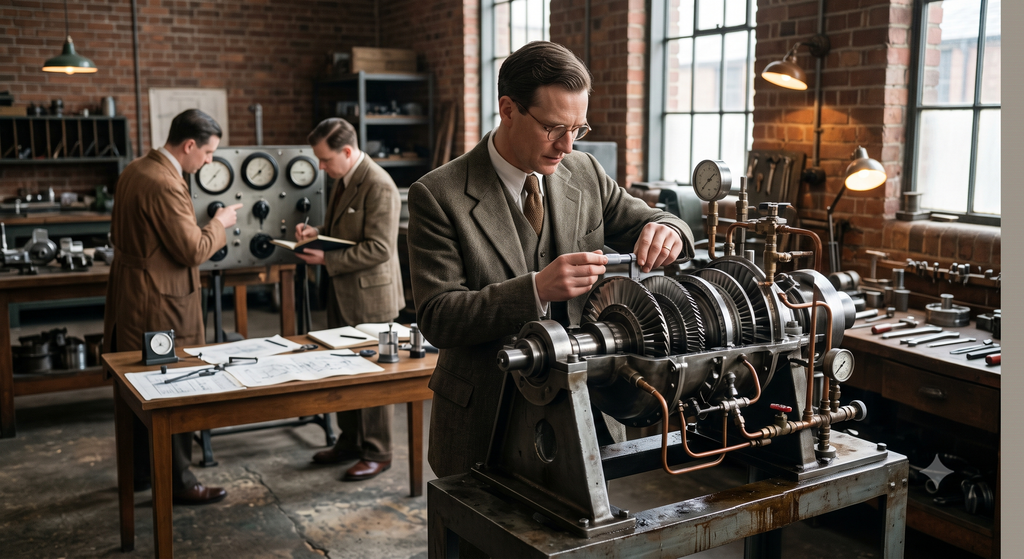
Modern aviation would be almost unrecognisable without jet propulsion, but this groundbreaking technology owes its origins to the work of British engineer Frank Whittle.
Whittle patented a jet engine design in 1932, at a time when most aircraft were being powered by either piston engines or propeller-driven systems.
His approach was to abandon the traditional combination of piston and propeller in favour of a much more radical design.
How a Jet Engine Works
A jet engine compresses air, mixes it with fuel and then burns this to create a jet of exhaust gases, using this thrust to propel the aircraft.
The principle was radically different from the propulsion systems that had dominated aviation during the early decades of powered flight.
The First Flight of Whittle’s Engine
It took years of development before Whittle’s experimental jet engine could be mounted on an aircraft and tested.
It happened in May 1941 when Gloster E.28/39 test pilot Pilot Officer Geoffrey de Havilland took the prototype W.1 engine on its first flight.
The jet age was about to begin – and this form of propulsion would go on to transform both military and commercial aviation.
3. James Watt and the Steam Engine
James Watt Didn’t Actually Invent the Steam Engine
Here’s a fun fact about steam power – James Watt didn’t actually invent the steam engine.
In fact, steam engines existed well before the Industrial Revolution, although engineers such as James Watt did play a vital role in making them more efficient.
The Separate Condenser
While examining a model of a Newcomen steam engine, Watt recognised a process that was wasting a considerable amount of energy: the cylinder had to be heated and then cooled as part of the operation.
His solution to this problem was the invention of the separate condenser.
By allowing the steam to cool in a separate chamber, the power output of the engine was vastly increased.
How Watt Changed Industrialisation
Watt’s improvements made steam engines much more economically viable and played a critical role in the Industrial Revolution.
From this point onward, factories no longer had to rely solely on traditional power sources such as water power.
This form of energy became one of the most important drivers of nineteenth-century industrialisation.
4. The Hovercraft
The Idea Behind the Hovercraft
Few British inventions are quite as fascinating as the hovercraft.
This device was the result of experimenting with a rather simple-sounding concept – instead of a vessel contacting the surface of water, what if it could be supported by a cushion of air?
Christopher Cockerell’s Experiment
British inventor Christopher Cockerell investigated this idea during the 1950s.
The initial prototypes utilised some rather rudimentary equipment to test this concept.
The idea was surprisingly simple: create a cushion of air beneath a vehicle so that it could travel with greatly reduced contact with the surface below.
The SR.N1 and the English Channel
The hovercraft concept soon developed into a fully working prototype, which made its first public appearance in 1959 as the SR.N1 hovercraft.
This machine made hovercraft history by completing the first ever crossing of the English Channel.
For a while it seemed that the distinction between boats and aircraft had ceased to exist.
The hovercraft was capable of travelling over water – supported by nothing more than a cushion of air.
Although this device never went on to revolutionise transportation, it remains one of the most fascinating twentieth-century British engineering innovations.
5. The Telephone
Alexander Graham Bell’s Scottish Origins
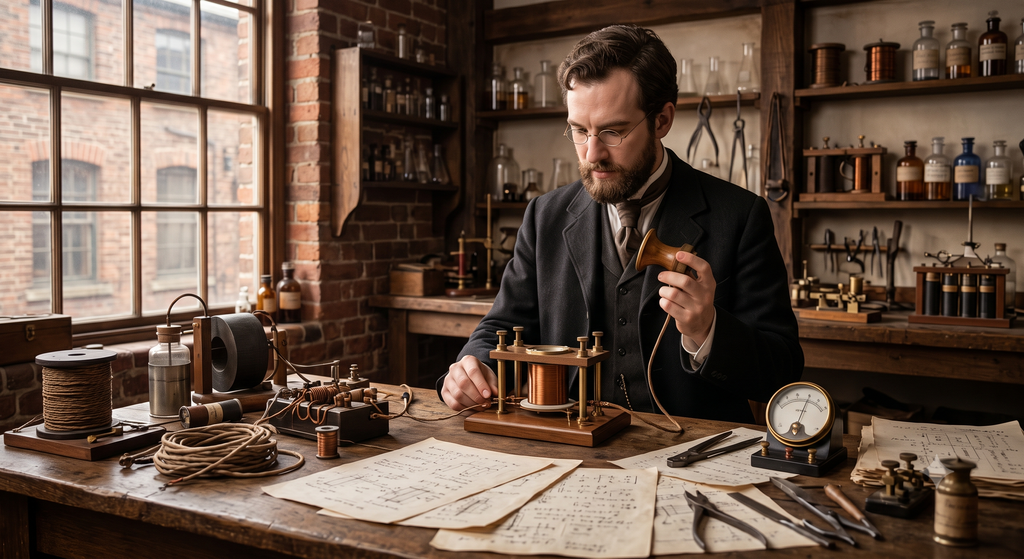
Alexander Graham Bell was born in Edinburgh, Scotland, in 1847.
This polymath engineer became fascinated by the science of spoken communication and eventually developed the telephone.
Bell’s interest in speech transmission led him to develop a device for carrying out the auditory process electronically.
Bell’s Telephone Patent
In 1876 he was granted a US patent for his invention.
The telephone represented a communications revolution.
Instead of messages having to travel between individuals through physical delivery, telephone networks enabled voice communication to take place remotely.
How the Telephone Changed Communication
These devices and the networks that linked them spread throughout the world.
Modern smartphones are far more technologically advanced than Bell’s original design, but the fundamental breakthrough – the ability for spoken words to travel almost instantaneously across large distances – remains breathtaking.
Why Were So Many Important Technologies Developed in Britain?
There isn’t a single reason for this.
Britain saw rapid industrialisation from the eighteenth century onwards, and this led to an increased focus on developing new machines, engines, transportation systems and manufacturing processes.
At the same time, the country’s long-standing expertise in engineering, scientific research, manufacturing and commercial enterprise contributed to an environment of technological innovation.
But there is another common thread that runs through this list.
It wasn’t always about inventing something radically new – in some cases, it was about looking at an established problem and finding a new way of solving it.
The separate condenser is a perfect example.
James Watt did not create steam power from nothing. Instead, he identified an important weakness in an existing system and developed a solution that made the technology substantially more useful.
The same principle can be seen in other inventions too: innovation often begins by asking whether an existing problem can be approached differently.
The British Inventions We Often Take for Granted
What makes these inventions so remarkable is their ordinariness.
The Web has become something that we take for granted – a concept that is almost invisible to us.
Jet aircraft have become commonplace at airports around the world.
Steam engines are now largely museum exhibits, while traditional telephone exchanges have largely been replaced by mobile phone networks.
The hovercraft may represent a bygone era of twentieth-century British engineering.
Yet, when we stop and think about each of these devices, we realise that each one was once an astonishing technological innovation.
That is what makes Britain’s legacy of technological invention so fascinating.
These devices are no longer new – and at the time, some of these concepts might even have been considered impractical – but today, they form part of our everyday technological experience.
Frequently Asked Questions
What are some famous British inventions?
The World Wide Web, major improvements to steam engine technology, the jet engine and the hovercraft are among the most notable British technological contributions. Alexander Graham Bell, who was born in Scotland, is also closely associated with the development of the telephone.
Did a British person invent the internet?
No. The internet and the World Wide Web are different things.
British computer scientist Tim Berners-Lee invented the World Wide Web while working at CERN. The Web is the system of websites and linked information that operates over the underlying internet.
Did James Watt invent steam power?
No. Steam engines existed before James Watt.
Watt made important improvements to steam engine technology, most notably the separate condenser, which made steam engines considerably more efficient.
Who pioneered the jet engine in Britain?
British engineer Frank Whittle was one of the key pioneers of the turbojet engine.
He patented his jet engine design in 1932, and years of subsequent development eventually led to the first flight of an aircraft powered by his W.1 engine in 1941.
Who invented the hovercraft?
British inventor Christopher Cockerell was responsible for developing the hovercraft concept.
His experiments during the 1950s eventually contributed to the development of the SR.N1, which publicly demonstrated the potential of hovercraft technology in 1959.
Conclusion
Britain’s contribution to modern technology is not simply a story of famous inventors and remarkable machines.
It is also a story of curiosity, experimentation and the willingness to rethink problems that had previously been accepted as unavoidable.
From the invisible network of the World Wide Web to the machinery of steam power, these innovations demonstrate how ideas developed decades ago can continue to influence everyday life.
Some changed how we communicate.
Others changed how we travel.
And others helped transform how the modern industrial world produced energy and goods.
The most fascinating part is that many of these technologies eventually became so familiar that we stopped noticing just how revolutionary they once were.